
 See My Latest Article on HelloNation
Building muscle without a gym is possible with consistent resistance training, enough food, adequate sleep, and a plan for gradually increasing difficulty. A gym can provide convenient equipment, but muscle growth depends more on challenging the muscles repeatedly than on where the workout takes place.
For residents in Dallas, TX, home-based training can be especially practical during very hot summer afternoons, stormy weather, or busy workweeks. A living room, garage, apartment, or shaded outdoor area can support effective training with little or no equipment.
Can bodyweight exercises build noticeable muscle?
Yes. Bodyweight exercises can build muscle when they are difficult enough, performed with good technique, and progressed over time. Beginners often gain strength and muscle from basic movements because their muscles are not yet adapted to the workload.
Useful bodyweight exercises include:
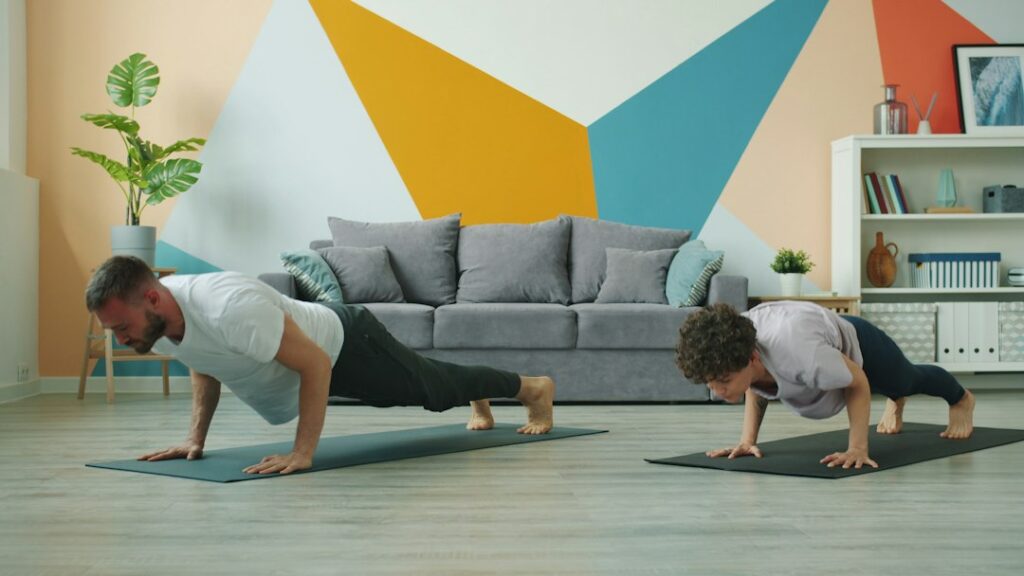
- Push-ups for the chest, shoulders, and triceps
- Squats for the thighs and glutes
- Reverse lunges for the legs and hips
- Glute bridges for the glutes and hamstrings
- Pike push-ups for the shoulders
- Inverted rows using a secure setup
- Planks and dead bugs for the core
The key is not simply completing more repetitions forever. Once an exercise becomes easy, increase the challenge by slowing the lowering phase, pausing at the hardest position, using a more difficult variation, adding resistance, or performing additional controlled repetitions.
For example, a person may progress from wall push-ups to incline push-ups, standard push-ups, feet-elevated push-ups, and eventually more advanced variations. Each step increases the demand without requiring a full set of weights.
What equipment helps most at home?
No equipment is required, but a few inexpensive items can make progression easier and safer. Resistance bands, a sturdy backpack, adjustable dumbbells, and a stable exercise mat can expand the range of available exercises.
A backpack can hold books, water containers, or other secure household items. It may be used for squats, lunges, step-ups, or push-ups. The load should be balanced and firmly contained so it does not shift during movement.
Resistance bands are useful for rows, presses, curls, triceps extensions, lateral raises, and leg exercises. They also take up little space, which makes them suitable for apartments and smaller homes.
Furniture should be used cautiously. A solid chair may work for seated exercises or supported movements, but lightweight chairs, rolling furniture, glass tables, and unstable surfaces should not be used for exercises that place body weight on them.
How often should someone train?
Most beginners can train each major muscle group two or three times per week. Full-body workouts are often efficient because they allow consistent practice without requiring a complicated schedule.
A simple weekly structure could look like this:
- Monday: Full-body strength
- Tuesday: Walking, mobility, or rest
- Wednesday: Full-body strength
- Thursday: Light activity or rest
- Friday or Saturday: Full-body strength
- Remaining days: Recovery or easy movement
A full-body session may include one pushing exercise, one pulling exercise, one squat or lunge, one hip-focused movement, and one core exercise. Two to four working sets per exercise is enough for many people, especially when each set is performed with control.
Training more often is not automatically better. Muscles need time to recover and adapt. Persistent soreness, declining performance, poor sleep, and unusual fatigue may indicate that the training volume is too high or recovery is insufficient.
How should a home workout be structured?
A practical workout begins with five to ten minutes of preparation. This can include easy walking, marching in place, arm circles, bodyweight squats, and gentle joint movements. Warm-ups should raise body temperature without exhausting the muscles.
A beginner-friendly session might include:
- Push-ups or an easier variation: 2–4 sets of 6–15 repetitions
- Squats or split squats: 2–4 sets of 8–15 repetitions
- Band rows or controlled backpack rows: 2–4 sets of 8–15 repetitions
- Glute bridges or hip hinges: 2–4 sets of 10–20 repetitions
- Planks or dead bugs: 2–3 sets
Rest about one to three minutes between challenging sets. Longer rest may be useful when breathing remains heavy or when the next set requires substantial strength.
The final repetitions should feel difficult while still allowing proper form. Stopping every set far before the muscles are challenged may limit progress, but repeatedly training to complete failure can make recovery harder. A useful target is to finish most sets with roughly one to three good repetitions still possible.
How do you keep making progress without heavier weights?
Progressive overload means gradually increasing the challenge placed on a muscle. Without a gym, progression can come from several sources:
- Add repetitions while maintaining technique.
- Add a set to an exercise.
- Use a heavier backpack or stronger resistance band.
- Slow the lowering portion to three or four seconds.
- Pause briefly at the hardest point.
- Increase the range of motion.
- Move to a more demanding exercise variation.
- Reduce rest slightly, provided strength and form remain reliable.

Keep a basic record of exercises, repetitions, resistance, and perceived difficulty. If push-ups increase from three sets of eight to three sets of twelve over several weeks, that is measurable progress. The next step may be a harder variation rather than endlessly adding repetitions.
What should you eat to support muscle growth?
Muscle development requires sufficient protein, total calories, and regular meals. Protein-rich foods include eggs, dairy products, poultry, fish, lean meats, tofu, beans, lentils, and other soy foods.
A practical target for many active adults is approximately 1.2 to 1.6 grams of protein per kilogram of body weight per day. People with medical conditions, dietary restrictions, or special nutrition needs should use individualized guidance rather than relying on a general target.
Carbohydrates support training energy, while dietary fats help provide energy and support normal body functions. Meals can be built around a protein source, a carbohydrate source, vegetables or fruit, and a moderate amount of healthy fat.
Hydration also matters. Hot weather and high humidity can increase fluid loss, particularly during outdoor exercise or workouts in garages without reliable cooling. Training during cooler morning or evening hours, exercising indoors, and drinking fluids regularly can make sessions more comfortable. Heavy sweating may require attention to electrolytes, especially during longer workouts.
Can walking or running help build muscle?
Walking and running support general fitness but are not complete muscle-building programs by themselves. Brisk walking can improve work capacity and help with recovery, while running strengthens the legs to some extent. Neither provides enough resistance for every major muscle group.
Pairing regular walking with two or three weekly strength sessions is a balanced approach. In Dallas, shaded routes, indoor walking spaces, and early-day activity may be more practical during periods of intense heat. Outdoor workouts should be adjusted when heat, humidity, lightning, or poor air quality creates unsafe conditions.
What mistakes commonly slow progress?
The most common mistake is changing the routine too often. Muscles need repeated exposure to similar movements before progress can be measured. Another problem is using fast, uncontrolled repetitions that shift tension away from the intended muscles.
Other issues include:
- Training hard but eating too little
- Ignoring pulling exercises and focusing only on push-ups
- Skipping leg training
- Treating soreness as the main sign of effectiveness
- Sleeping inconsistently
- Using unstable furniture or unsafe makeshift equipment
- Increasing resistance before mastering technique
Pain that is sharp, sudden, worsening, or located in a joint should not be treated as normal training discomfort. Stop the movement and allow the issue to settle before resuming. Persistent pain, dizziness, chest discomfort, or unusual shortness of breath warrants medical attention.
How long does it take to see results?
Strength may improve within several weeks, partly because the nervous system becomes more efficient at coordinating movement. Visible muscle changes often take longer and depend on training consistency, nutrition, starting condition, sleep, age, and genetics.
Take progress measurements under similar conditions, such as monthly photos, body measurements, repetition records, or changes in exercise difficulty. Daily appearance can vary with hydration, meals, lighting, and fatigue, so short-term changes are not always meaningful.
A well-planned home program can continue for months or years. The most effective routine is one that fits the available space, survives seasonal weather changes, uses safe equipment, and provides a clear way to make exercises more challenging.